Als je mijn review van Orbitals hebt gelezen weet je dat ik de game ontzettend aanraad aan iedereen met een Switch 2. Hoewel de game nu net pas uit is had ik de game al voor gamescom kunnen doorspelen en mocht ik op de beurs een interview houden met Jakob Lundgren (Creative Director) en Marcos Ramos (Creative Director) van Orbitals. We hebben het over van alles gehad betreffende game zonder het verhaal te spoilen. Er is één vraag die wat weggeeft over het einde, maar die is verborgen tot je er op klikt.
DN: Thank you both for your time. Can we start for a moment with a small introduction about yourselves and your history?
Marcos: So my name is Marco Ramos, I come from Argentina, I’m the creative director on Orbitals, I’ve been with Shapefarm, our studio, for 8 years or something like that and we produce many, many games like Samurai Jac: Battle Through Time and Natruto to Boruto Shinobi Striker. This is our first original title and I couldn’t be prouder on it.
Jakob: Yeah, my name is Jacob Lundgren. I’m from Sweden, been making games for I think 12 years, 13 years now. Before joining Shapefarm around 4 years ago I was at Hazelight, worked on A Way Out, It Takes Two and Split Fiction. Since I joined Shapefarm it has all been about Orbitals.
DN: Marcos, you mentioned this is the first fully original game by Shapefarm. What was the change like from helping on other IP’s to making your own?
Marcos:: So the dream was always there, from the beginning, we always wanted to make our own games, we have all these things that we wanted to try and say, but of course, we had to pay the bills, you know, and we had to also learn to be a studio and work together. So what started as this group of friends, basically in a house in Tokyo, little-by-little evolved into having like processes and pipelines. Luckily, our partners in Tokyo, really liked the way we made our characters and assets and all the art that we were providing.
And that’s where we cut our teeth, you know, in the anime style. We’ve always been working with, like stylized games, so when finally, the time came, the opportunity came to work on our own thing we already had, like a lot of years of experience making stylized anime games, but then it also meant that we had to fill all the roles and all. The things that we didn’t have in the company, and that’s about the time that you, I mean, right, like, you (Jakob), build the game design group, you know, engineering.
Jakob: Yeah so the tech side and the gameplay side
Marcos: Yeah, so yeah, it was a full transition, you know, to become in a full studio.
DN: So Shapefarm is very experienced with games in anime style. But even for that genre Orbitals is very unique. It has a very unique visual identity. Especially for this era with the obsession for framerates, why was there chosen for such a style? And how did you decide on “hey this could work”
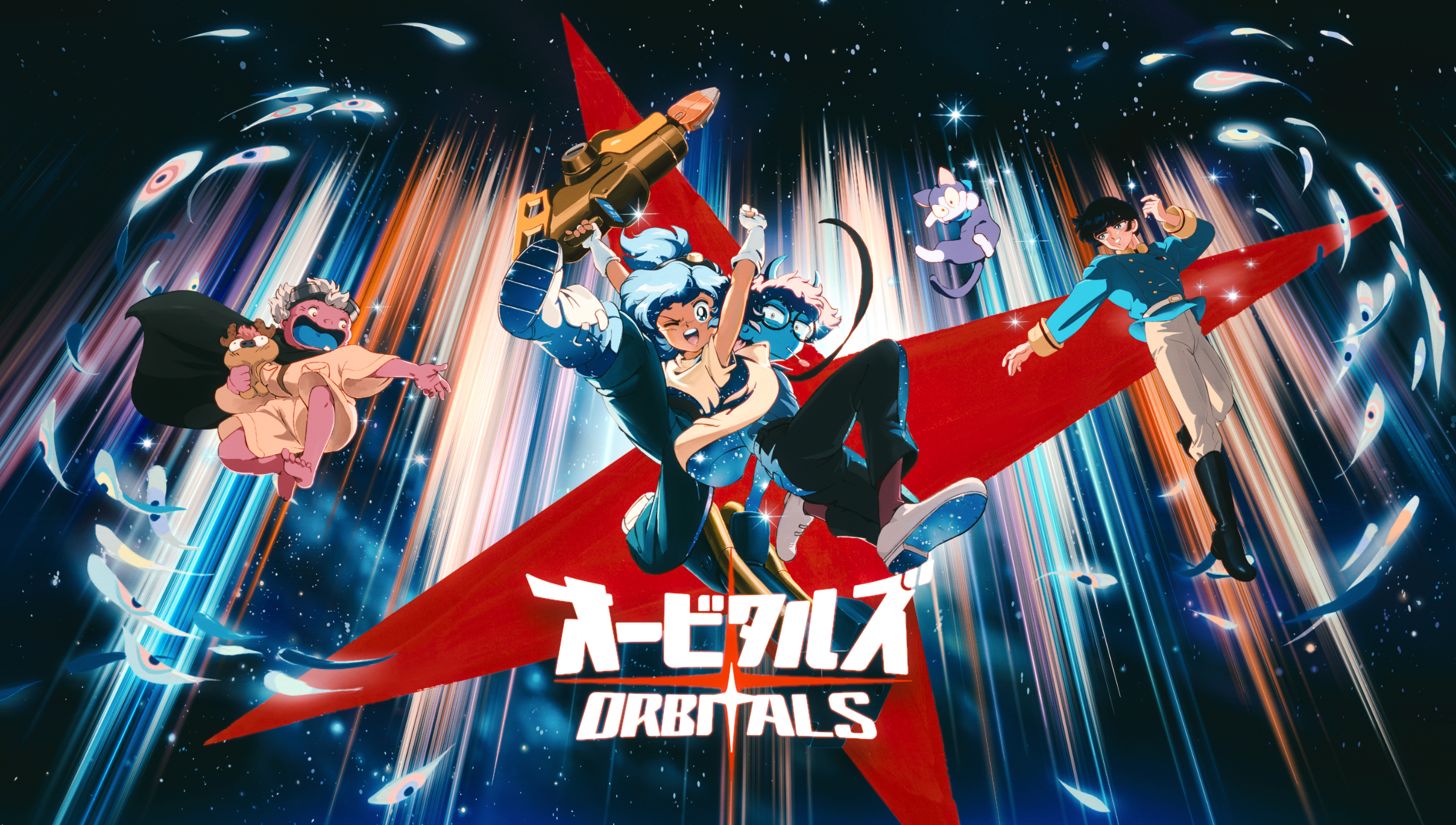
Marcos: Honestly, it wasn’t hard at all, like it wasn’t like something that we did, some market research or anything like that before starting on it. We were like, you know, jumping at the bit. It was like, oh do we get to start making our own game now, do we do it? Do we do it? And then when we finally did it, it was kind of obvious that we had to do something that we personally wanted to do. And we personally really, really loved anime from the 80s and 90s. So yeah, it wasn’t super easy, you know, to actually execute on that idea, because like, 4 years to do it, but it wasn’t hard to make the decision we knew that from almost day, one that this is what we wanted to do.
Jakob: It all comes from a place of passion, anything that we do. It’s all about, you know, what we believe in, like what makes us excited. What makes us want to make this game. We both super believe that in order to make a good game, it has to be something that you care deeply about, you cannot just look at, what’s successful or what’s you know, doing well, at the moment, because it’s not going to end up being genuine and feel like it has a soul. So the anime style and co-op gameplay comes from what we care about.
DN: So you decided on the core from the beginning, but did you have any challenges with creating a game like this?
Marcos: Yeah a lot of challenges.
Jakob: You spoke about framerate, it’s actually funny. Us, co-directing the game and having sort of different focuses at one point in time I came to Maroc and I asked to remove the stepped frames from the characters because it was like, the gameplay feels worse with it. Marcos responded with: “No, because it’s so important to the style.”. And we kind of had this brief clash of like, you know, what’s best for the game.
But we ended up keeping the stepped animations, and instead, just putting more effort into making sure that it feels great in the game. So it didn’t come naturally. A lot of these things like they came with their challenges that we had to solve in order to still, make justice to what we were creating.
Marcos: Yeah, I think a focused shift that happened around that time was that we said we are not obsessed about recreating the anime medium to be like pixel perfect, it was more about capturing a feeling. Translating something from that is something you passively watch to something that you actively are engaging with. Like with any translation, there’s some form of interpretation. So some places we change, you know, maybe they wouldn’t have done this in the 80s, but it feels like the 80s, and that feeling, is what became the goal of the development.
DN: You mentioned taking out specific elements like stepped frames and even with the lower framerate the charactes still feel fluid and lively. There are a lot of tiny details in the world but still ytou don’t interact with people and creatures to much. What was the choice behind keeping the interactions small. Like in the spaceship where you can kick over a bucket of water.
Jakob: I think it honestly it just comes down to like we’re still a very small team, we’re making our first game. We love this sort of stuff like those moments is a huge part of what Orbitals is. While we would love to fill the entire world with it, we’re still, a small kid, and it was not possible at this point.
DN: If I remember correctly, during the preview we were told you worked with Studio Maskett on this. So how did you end up with that studio. And how hard was it for them to get the 80’s style done in a way you wanted. Because they also had to learn it right?
Marcos: So when we started working on Orbitals, we really wanted to do it right. We didn’t want to just like, you know, do like a surface level, you know, kind of a homage to the 80’s. And then kind of be done with it. So like the way we call it is slap, a cell shader on some character and call it a day.
We really wanted to do it right. And that meant basically doing a lot of research, and sometimes like going to the actual source, like who made these anime that we are referencing right, and being in Tokyo is kind of easy because they are right around the corner, so we started writing emails, contacting a lot of studios, you know, a lot of these legends. Some people were like, okay, cool, but no, thank you, and some other people were like, oh, we are really interested, we love that idea. We went through a lot of studios, and then we found Maskett.
Which have worked, you know, on Pokémon, they have worked on One Piece, Demon Slayer demon slayer and also so they had the pedigree for like big spectacle. But they had also had some people in their ranks that actually worked in the 80’s. Like in some of the anime that we referencing. So we got together and discussed potential workflows. Basically what we established was that we didn’t want to just like, you know, pay them a lot of money and hope for cutscenes. You know, we really wanted to be like one. So it became kind of like a co-development there, right like a lot of the ideas that they came up with, you know, made it into the game what we made went into the cutscenes.
Jakob: I think the main like the starting point was they came to our office. They saw the game and just, they got so excited by it. They felt like a great match. We want to work with people who are like genuinely excited about the game as well.
DN: So you talked a bit on the co-development, how much did the core story change over the years?
Marcos: Quite a lot, quite a lot, quite a lot, we had this huge epic thing where, like there were all these like worlds and stuff and characters and factions and whatnot. At some point we had to like basically narrow it down because otherwise we would have been working on this game for like 10 years, and that was a blessing in disguise. Because it made us like, really focus on what we cared about, like, who are the main characters, what’s unique about them, what kind of interactions we want to have in the world, what kind of mechanics we want to have. It all became like laser focused, so, yeah, the story used to be quite large, and now a lot smaller. It is a lot deeper now though.
DN: I was actually curious about the length of the story. Because the game is not very long but the story is intense. How hard was it to cut all the other parts from it?
Marcos: Well, like I was mentioning, it’s like the focusing on what’s key, what’s important what we can live without. So we always knew that even though it is a sci-fi story, and there is charm in exploring all these new spaces. Orbitals is first and foremost a human story. It’s about connecting with Maki and connecting with Omura and their struggles, and how they feel trying to protect their settlement. Anything else could change while new characters come in and out, but like that should be always having the core of the idea. Yeah, and it gets intense like you mentioned and that is what we think is part of the charm.
DN: So we talked a lot about the visuals and the story but let’s look at the gameplay for a bit. Jakob you mentioned having worked at Hazelight on games like It Takes Two. What lessons did you take from there. Because Orbitals has a lot of similarities but is also very different.
Jakob: So I took a lot of lessons from there. Back when working on A Way Out, we didn’t know how to make a co-op game, and there weren’t having any references for a co-op game like that. So we really had to try a ton of different things, and I think going into It Takes Two we took those learnings, and really like, dove deeper into co-op. Pretty much all of those learnings are brought with me into Orbitals, everything about, like, you know, making simultaneous co-opp like co-op that promotes communicating between the players. Really valuing this experience between the players that this is what’s happening between us, as we play is just as important as the actual mechanics on the screen. What we’re talking about, and how we’re talking, all of those things have been brought pretty much into this. I would say.
DN: Kind of a follow-up on this. In the games from Hazelight each player pretty much gets a role depending on the character they chose. With Orbitals the gear is limited but you can switch around. How did you get to this decision?
Jakob: So yeah, this approach was something that came up early in the development because of what I saw with those other games. People would be playing the game then get the mechanic that they didn’t really enjoy. And they would swap the controller, and there’s nothing wrong with that. You can still play the game like that, but it always kind of irked me.
It felt like we want the players to connect with the character that they picked, and get a bond to that character. And when you just swap characters back-and-forth, you kind of lose a bit of that, so that’s when we came up with the idea of like, let’s just leave the choice up to the players. If there’s a certain mechanic that you prefer using or that you find easier to use, then we just leave it up to you. You can pick the one you want.
DN: Is that same philosophy behind the easy swapping of flying and shooting in the ship?
Jakob:”Exactly. Yeah, we could have written it into the story that like Maki is the pilot, you know, but we always want to leave that option to the players.
Marcos: Also, it was very important that no particular character feels like the protagonist. If we were to make like, oh maki is the pilot, an Omura the copilot, then that would kind of have said, like, oh, she’s the protagonist right? And to us it was important that both of them felt equaly important.
DN: The game is mostly co-op, but every world has a mini-game to find which are pretty diverse and different from normal gameplay. So how did you end up making it feel part of the world. Like with catchin Capy’s (ingame creature)?
Jakob: Yeah, yeah, with a lot of these things, a lot of these ideas are not stuff that come from us. It’s more just like we want fun and diverse mini-games. We want stuff that brings a smile to people’s faces, and then we kind of live it up to the team. Like, what do you guys want to do, what’s exciting for you?
Marcos: I love the laser jumping one, and I think that came about like thinking about things that we did as kids, you know, connecting with that feeling. That’s what Orbitals is always about, bringing you back to those moments. So I love like the idea of like, oh, it’s just two good friends, you know, having a good time, you know, and like friends go and do like this random things.
Jakob: Like jumping over lasers.
DN: So during development a lot of competitions were held with the team?
Jakob: Oh, yeah, yeah, yeah, like Friday evening at the office, competing in the mini-games.
Marcos: Like the even to this day, I think the punching mini-game is often played.
Jakob: Yeah, anytime we come past there, we just have to.
DN: So without spoiling too much about the story, is there a chance we will see more of Maki and Omura in the future? (Potentieel kleine spoiler dus antwoord is verborgen)
Klik hier voor het antwoord
Marcos: But like they ride into the sunset at the end, you know, like hoping for a better tomorrow. And that kind of like hopeful end is what we wanted to leave it, you know, like we discussed for the credits. It’s like, oh, we can explain exactly what happens to them. And then we were like, no, no, no. Let’s leave it, you know, like an open end, you know, like the adventure continues. That was always the vision for the ending.
DN: As a final question. What are your personal elements of the game you would say players need to do. Like look for specific Easter Eggs, like any tip that makes the game even more special?
Marcos: I would say like, interact with as many things as you can. I personally love when Omura goes into Maki’s room and Maki goes into Omura’s room in the ship. I think it’s super funny because it kind of shows like the kind of people they are. So yeah, look for like all these little things, you know, and like, engage, you know, with the game as much as possible. There’s like little nuggets of information all over the place.
Jakob: Then, I’ll say, interact with each other because all of the different tools can interact with the other player, and you can have a lot of fun by messing with each other using that.